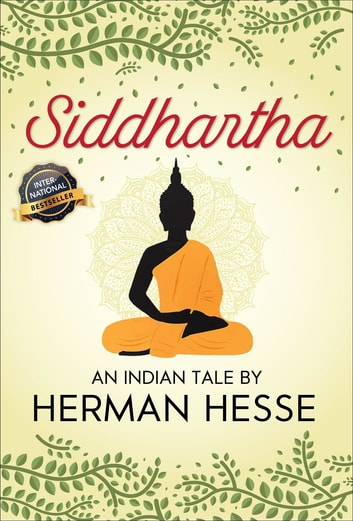
Book Review - Siddhartha


Reference - https://www.amazon.in/Siddhartha-Indian-Tale-Pocket-Classics/dp/9386538202/


This is a book written by the renowned German author Herman Hesse in 1922. It is a timeless classic. The spiritual journey of a young boy in search of an enlightenment is still very much relevant today.

I came across this book through one of the book reading sessions at Microsoft. Book manages to make the experiences of a young boy in his adventurous and searching life very visual and lively. The boy, Siddhartha, starts his journey from his father's home and meets a range of people, traveling to different places, each experience bringing certain changes in his life. As I continued reading, the places and characters in the book became very much alive. They all leave a definite footprints in our minds. 

Through the journey of this young boy, the author takes us through various aspects of our lives, from richness to poverty, from an ordinary ferryman to an exalted Buddha. In most part, the language is easy to understand. Some portions are quite comprehensive when it dives deeper into philosophy. Also at 190 odd pages, it will be over soon.

If one likes classical English literature and is looking for some simple yet meaningful read, this book is definitely recommended. It will surprise you.

Comments

Popular posts from this blog

The Engineering Admission Guide

Ever since I graduated, every year I receive queries regarding engineering admissions. This blog is a sincere effort to highlight some of the key points to be considered during admissions. The suggestions are based on my personal experiences and observations. Institute name matters, Always No matter what course you actually get engaged with, it’s the name of your alma mater that matters. It is this institute which will be a part of your resume for the rest of your life. It’s not that very good institutes have altogether different syllabus or teaching methodologies. But there are other things which make them special: There will be few professors who are exceptionally good in their field of work. Their guidance can do wonders. Being a top institute, it will attract the best talent with whom you’ll be interact on regular basis. You’ll get a lot of learning from your batch mates, seniors and juniors. You’ll be able exposed to better companies for your i...

3 Phases of a Newborn

As my son approaches his first birthday, my mind rewinds all the moments associated with him since I took him in my hands just 15 minutes after his birth. Since then there isn't a single day when I haven't seen him, which allowed me to observe his natural growth over the one year. I have divided the growth in 3 different phases: 1. Dependent Phase The first four months describe this phase. The child has just come into this world. He is getting used to the day-night schedule, lights and sounds, faces and expressions. He remains confined to whichever place you take him to, relying mostly on mother's milk for food, sleeping for almost 14 hours a day, this is the quietest phase of his childhood. They slowly develop their vision and hearing capabilities. Most of their instincts rely on the feeling of touch. They are yet to identify their parents, and therefore do not hesitate spending time with others. Best Part: Playing with his tiny and delica...

Book Review - The Battle of Rezang La

Background 1962 Sino-Indian war happened some 60 years ago. While we rightly celebrate our victories in other wars fought over the last 75 years, the loss of 1962 is not discussed. Despite the loss, the raw courage shown by the Indian armed forces in the absence of modern facilities in extreme whether conditions was bravery of the highest class. The stories related to this war has always fascinated me. I got good information about the war fought in NEFA during our visit to Tawang and Bumla last year. This book The Battle of Rezang La  provides quite a comprehensive account about the war fought in the Ladakh region, especially the Rezang La battle fought by the Charlie Company.   Preface Ram Chander and Nihal Singh were captured by the Chinese soldiers during the battle on 18 November 1962.  They managed to escape and survived the battle injuries to reach back to the Indian camp in extreme conditions. When they narrated the details of the war, their truth about the battle ...